
ISO 27001 Certification in New Zealand
CertPro is a Licensed CPA Firm conducting formal ISO 27001 certification audits for organizations operating in New Zealand. Certification is issued under ISO/IEC 27001:2022 following a structured, evidence-based audit program. CertPro evaluates Information Security Management Systems against all mandatory clauses and applicable Annex A controls within a defined organizational scope.
OUR CLIENTS










What Is ISO 27001 Certification?
ISO 27001 certification is the formal confirmation, issued by an accredited certification body, that an organization’s Information Security Management System (ISMS) conforms to the requirements of the ISO/IEC 27001:2022 standard. Certification is not a self-declaration — it is the outcome of a structured, independent audit conducted by qualified auditors who assess documented evidence, implemented controls, and operational effectiveness across the organization’s defined scope.
ISO/IEC 27001:2022 is the current version of the international standard specifying requirements for establishing, implementing, maintaining, and continually improving an ISMS. The 2022 revision replaced ISO/IEC 27001:2013 and introduced a restructured Annex A with 93 controls organized across four thematic categories. Organizations certified to the 2013 version were required to transition to the 2022 standard by 31 October 2025, as mandated by international accreditation bodies. ISO 27001 certification in New Zealand confirms that an organization meets these globally recognized requirements.
Definition: Information Security Management System (ISMS)
An Information Security Management System (ISMS) is a documented, risk-driven framework governing how an organization identifies, manages, and reduces information security risks. The ISMS encompasses policies, procedures, processes, organizational structures, and technical controls. It operates on a Plan-Do-Check-Act (PDCA) cycle, ensuring that security controls are not static but are continuously reviewed, improved, and adapted to evolving threats and business contexts. The ISMS scope defines the boundaries within which the organization’s information security commitments apply — this may cover an entire organization or specific business units, systems, or geographic locations such as operations in Auckland or Wellington.
For New Zealand organizations, the ISMS must address risks relevant to the local operating environment, including obligations under the New Zealand Privacy Act 2020, requirements of the New Zealand Information Security Manual (NZISM), and cross-border data transfer considerations with Australia and international partners. ISMS certification New Zealand confirms that the documented framework is not only established on paper but is actively implemented, monitored, and subject to internal audit and management review processes that demonstrate sustained operational effectiveness.
Definition: Statement of Applicability (SoA)
The Statement of Applicability (SoA) is a mandatory document required under ISO/IEC 27001:2022 Clause 6.1.3. The SoA maps each of the 93 Annex A controls to the organization’s scope, providing documented justification for the inclusion or exclusion of each control. Where a control is excluded, the SoA must record the rationale — typically because the associated risk does not apply within the defined scope or is addressed through alternative measures. The SoA serves as a central audit artifact: during the certification audit, auditors verify that the SoA accurately reflects the organization’s risk treatment decisions and that included controls are demonstrably implemented.
The SoA is not a one-time document. Under ISO 27001, the SoA must be maintained and updated as the organization’s risk landscape, scope, or control environment changes. For organizations seeking ISO 27001 certification in New Zealand, the SoA is reviewed at every audit stage — including Stage 1, Stage 2, annual surveillance audits, and the recertification audit in Year 3. Failure to maintain an accurate, current SoA constitutes a nonconformity that can prevent certification from being issued or maintained.
Annex A Controls: Structure and Categories
Annex A of ISO/IEC 27001:2022 contains 93 controls organized across four thematic categories. These controls represent a comprehensive menu of information security measures from which organizations select applicable controls based on their risk assessment outcomes. The four categories address distinct dimensions of information security, from governance policies to technical safeguards. Organizations are not required to implement all 93 controls — only those relevant to identified risks within the defined ISMS scope. However, every control must be addressed in the Statement of Applicability, with documented justification for each inclusion or exclusion decision.
| Annex A Category | Number of Controls | Focus Area |
|---|---|---|
| Organizational Controls | 37 | Policies, roles, responsibilities, supplier relationships, incident management |
| People Controls | 8 | Screening, terms of employment, awareness, training, disciplinary processes |
| Physical Controls | 14 | Physical security perimeters, equipment protection, clear desk/screen policies |
| Technological Controls | 34 | Access control, cryptography, network security, secure development, monitoring |
Certification Cycle and Validity
ISO 27001 certificates are valid for three years from the date of issue. The three-year certification cycle comprises three distinct audit events: the initial certification audit (Stage 1 and Stage 2), a first surveillance audit conducted approximately 12 months after certification, a second surveillance audit at approximately 24 months, and a recertification audit at 36 months to renew the certificate for a further three-year period. Surveillance audits are less extensive than the initial certification audit but must confirm that the ISMS remains operational, that nonconformities identified previously have been resolved, and that the organization continues to meet ISO/IEC 27001:2022 requirements.
For New Zealand organizations, maintaining the three-year certification cycle provides continuous validation of information security practices — a requirement increasingly specified in government procurement contracts, financial services vendor assessments, and enterprise supply chain due diligence processes. ISO 27001 audit New Zealand activities conducted by CertPro follow this structured cycle, with each audit stage producing documented findings, corrective action requirements where applicable, and formal certification decisions based on objective evidence.

ISO 27001 Requirements in New Zealand
ISO 27001 certification requirements apply uniformly across all organizations pursuing certification under ISO/IEC 27001:2022, regardless of geographic location. However, the application of these requirements in New Zealand must account for the specific legal, regulatory, and operational environment in which New Zealand organizations operate. The standard’s requirements are defined in Clauses 4 through 10, each addressing a distinct dimension of ISMS design, implementation, and operation. Organizations must demonstrate conformance with all mandatory clauses without exception — no clause may be excluded from the scope of the audit.
New Zealand organizations pursuing ISO 27001 certification must address the full clause structure while ensuring that their ISMS documentation reflects the specific legislative obligations arising under the New Zealand Privacy Act 2020, which governs the collection, use, storage, and disclosure of personal information. The NZISM — New Zealand Information Security Manual — provides additional technical guidance relevant to government agencies and their suppliers. Organizations operating within regulated sectors such as financial services, healthcare, and critical infrastructure must map ISO 27001 controls to applicable sector-specific requirements as part of their documented risk treatment decisions.
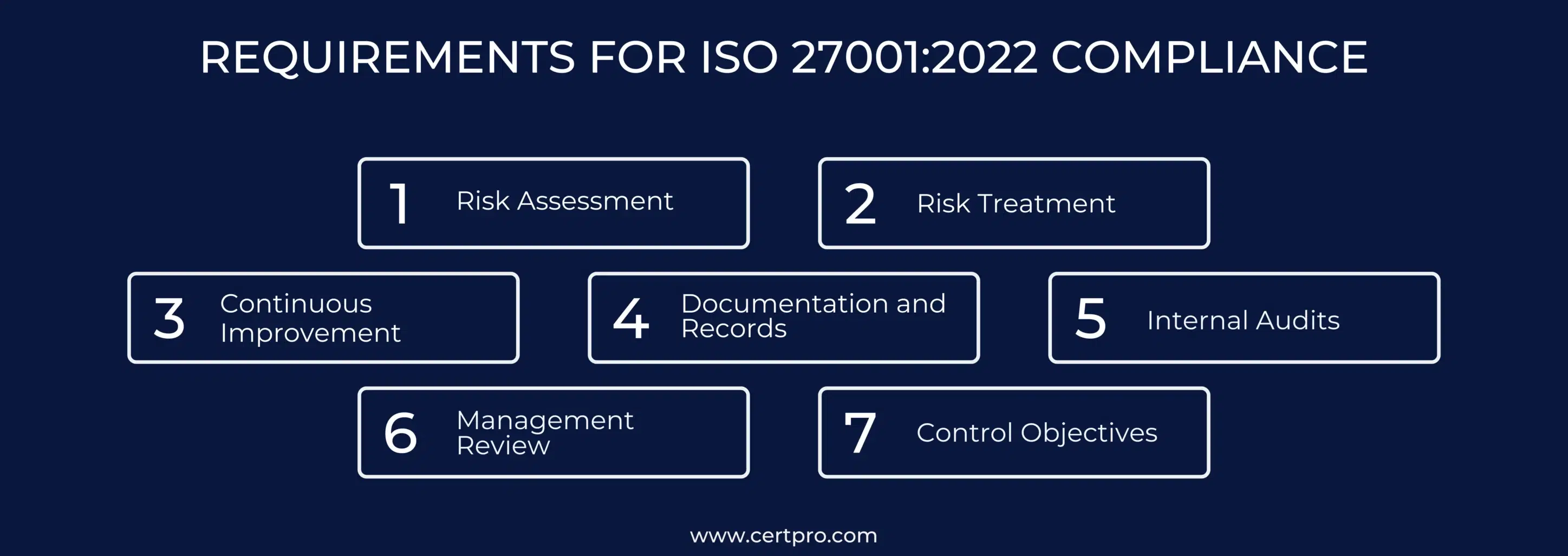
ISO/IEC 27001:2022 organizes its mandatory requirements into seven clauses numbered 4 through 10. Each clause defines specific requirements that the certification audit assesses through document review, interviews, and observation of implemented controls. Clause 4 (Context of the Organization) requires the organization to define internal and external issues relevant to information security, identify interested parties and their requirements, and establish the ISMS scope. For New Zealand organizations, the context analysis must address the local regulatory environment, including the Privacy Act 2020, NZISM obligations, and relevant industry standards.
Clause 5 (Leadership) requires top management to demonstrate active commitment to the ISMS through defined information security policies, assigned roles and responsibilities, and integration of ISMS requirements into organizational processes. Clause 6 (Planning) mandates a structured risk assessment and risk treatment process, including the production of the Statement of Applicability and a documented risk treatment plan. Clause 7 (Support) covers resource allocation, competence management, awareness programs, communication, and the maintenance of documented information. Clause 8 (Operation) requires that planned processes are implemented and controlled, with evidence of operational risk management activities.
Clause 9 (Performance Evaluation) mandates monitoring, measurement, internal audit, and management review activities that demonstrate the organization systematically evaluates ISMS effectiveness. Clause 10 (Improvement) requires that nonconformities are identified, corrective actions are implemented and verified, and the ISMS is continually improved. The certification audit conducted by CertPro assesses conformance against all seven clauses through objective evidence — documentation, records, process observations, and interviews — producing audit findings that form the basis of the certification decision.
| Clause | Title | Key Audit Assessment Areas |
|---|---|---|
| Clause 4 | Context of the Organization | ISMS scope, interested parties, internal/external issues |
| Clause 5 | Leadership | Policy, roles, top management commitment |
| Clause 6 | Planning | Risk assessment, risk treatment, SoA, objectives |
| Clause 7 | Support | Resources, competence, awareness, documented information |
| Clause 8 | Operation | Operational planning, risk treatment implementation |
The ISO 27001 risk management process is a structured, documented sequence that forms the operational foundation of the ISMS. Under ISO/IEC 27001:2022 Clause 6.1.2, organizations must establish and apply a risk assessment process that produces consistent, valid, and comparable results. The risk management process comprises four sequential stages: risk identification, risk assessment, risk treatment, and ongoing risk monitoring and review. Each stage must be documented with sufficient evidence to demonstrate to auditors that the process is applied systematically and consistently across the ISMS scope.
- Risk Identification: Identify information assets, threats, and vulnerabilities within the ISMS scope. Document the information security risks associated with each asset, considering confidentiality, integrity, and availability dimensions.
- Risk Assessment: Evaluate each identified risk by determining the likelihood of occurrence and the potential impact if the risk materializes. Assign risk ratings using a documented methodology that produces consistent, comparable results.
- Risk Treatment: Select treatment options for each assessed risk — accept, avoid, transfer, or mitigate. For risks selected for mitigation, identify applicable Annex A controls and document these selections in the Statement of Applicability.
- Risk Treatment Plan: Produce a formal risk treatment plan documenting the selected controls, implementation responsibilities, timelines, and residual risk acceptance decisions signed off by risk owners.
- Risk Monitoring and Review: Continuously monitor implemented controls for effectiveness. Conduct periodic risk assessment reviews — at minimum annually — to account for changes in the threat landscape, business environment, or ISMS scope.
- Risk Acceptance: Document risk acceptance decisions by authorized risk owners for risks where treatment to acceptable levels is not feasible or cost-effective within the defined scope.
For New Zealand organizations, the risk management process must account for threats specific to the New Zealand operating environment, including risks associated with natural disaster events (New Zealand’s geographic seismic and weather risk profile), cross-border data transfers under the Privacy Act 2020, cyber threats relevant to the Asia-Pacific region, and supply chain risks arising from technology dependencies on international cloud service providers. The risk assessment methodology chosen by the organization is not prescribed by the standard — however, it must be documented, applied consistently, and capable of producing results that inform control selection decisions aligned with ISO 27001 requirements New Zealand auditors will evaluate.
- ✓Key Clauses 4–10 and Their Audit Significance
- ✓Risk Management Process Under ISO 27001
Who Needs ISO 27001 Certification in New Zealand?
ISO 27001 certification in New Zealand applies to any organization that processes, stores, or transmits sensitive information and operates within environments where information security risk management is a defined requirement — whether driven by contractual obligations, regulatory expectations, or operational risk imperatives. The standard is sector-neutral: it applies equally to private enterprises, public sector agencies, not-for-profit organizations, and multi-national corporations with New Zealand operations. The decision to pursue certification is driven by the organization’s risk profile, the sensitivity of the information it manages, and the expectations of its customers, partners, and regulators.
New Zealand’s growing digital economy has accelerated demand for ISO 27001 certification across multiple sectors. Technology companies and SaaS providers operating from Auckland, Wellington, and Christchurch increasingly face customer procurement requirements that specify ISO 27001 certification as a baseline vendor qualification. Government contractors and suppliers to New Zealand public sector agencies must demonstrate information security practices consistent with NZISM requirements, and ISO 27001 certification provides a recognized framework for meeting these obligations. The financial services sector — including banks, insurers, and fintech firms — faces regulatory expectations around information security that ISO 27001 certification directly addresses.
Sectors and Organizations Requiring ISO 27001 Certification
- ✓Technology companies and SaaS providers managing customer data or cloud-hosted applications for New Zealand and international clients
- ✓Government agencies and public sector contractors subject to NZISM security requirements and government procurement security obligations
- ✓Financial services organizations including banks, insurance companies, KiwiSaver providers, and fintech firms handling sensitive financial data
- ✓Healthcare organizations managing patient health information under the Health Information Privacy Code and Privacy Act 2020
- ✓Cloud service providers and managed service providers (MSPs) operating data centres or remote infrastructure services in New Zealand
- ✓Telecommunications companies and network infrastructure operators classified under critical infrastructure requirements
- ✓Legal and professional services firms managing confidential client data and privileged communications
- ✓Retail and e-commerce organizations processing payment card data and personal customer information at scale
- ✓Educational institutions managing student records, research data, and intellectual property
- ✓Organizations with cross-border data flows to Australia, Asia, Europe, or North America requiring demonstrable security assurance to international partners
ISO 27001 certification is not mandated by New Zealand law as a universal requirement. However, it functions as a de facto requirement in numerous procurement and contractual contexts. New Zealand government agencies increasingly specify ISO 27001 certification — or equivalent demonstrable compliance — in requests for proposals (RFPs) for technology, data management, and cloud services. Enterprise clients in regulated industries require ISO 27001 certified vendors as a condition of supplier onboarding. Organizations seeking to export services to Australia must often demonstrate ISO 27001 compliance to satisfy Australian Prudential Regulation Authority (APRA) CPS 234 supply chain requirements imposed on regulated entities they serve. In this commercial landscape, ISO 27001 certification functions as essential market access documentation for New Zealand technology and services exporters.
ISO 27001 Audit Process
The ISO 27001 audit process conducted by CertPro follows a structured, multi-stage methodology that evaluates an organization’s ISMS against the full requirements of ISO/IEC 27001:2022. The audit program is determined based on the organization’s defined scope, size, complexity, and the nature of information assets within the ISMS boundary. CertPro’s audit team reviews documented evidence, conducts structured interviews with relevant personnel, and observes implemented controls to form objective audit findings. The certification decision is made solely on the basis of documented audit evidence — not on representations, intentions, or planned future actions.
The ISO 27001 audit process for organizations in New Zealand follows five defined stages from initial scope determination through to certificate issuance and the ongoing surveillance cycle. Each stage produces formal documented outputs — audit plans, audit reports, nonconformity records, corrective action verifications, and certification decisions — that constitute the complete audit record. CertPro maintains audit records in accordance with accreditation body requirements, ensuring the integrity and traceability of all certification decisions issued to New Zealand organizations.
The Stage 1 audit is a documentation review conducted to assess whether the organization’s ISMS is sufficiently designed and documented to proceed to the Stage 2 implementation audit. During Stage 1, CertPro auditors review the ISMS scope statement, information security policy, risk assessment methodology, risk register, Statement of Applicability, risk treatment plan, and other mandatory documented information required by ISO/IEC 27001:2022 Clauses 4 through 10. The Stage 1 audit confirms that the ISMS documentation reflects the organization’s actual operating environment and that the organization understands its obligations under the standard.
Stage 1 findings are documented in a formal Stage 1 audit report that identifies areas of concern, major gaps, or documented weaknesses that must be addressed before the Stage 2 audit proceeds. Stage 1 findings may be classified as major nonconformities, minor nonconformities, or observations. Where major nonconformities are identified at Stage 1, the organization must resolve these before the Stage 2 audit date is confirmed. The Stage 1 audit is typically conducted on-site or remotely and focuses exclusively on documentation and design adequacy — it does not assess the operational effectiveness of implemented controls, which is the purpose of the Stage 2 audit. For New Zealand organizations, the Stage 1 audit examines whether documentation addresses NZ-specific regulatory requirements, including references to the Privacy Act 2020 and applicable NZISM controls.
The Stage 2 audit is the primary certification audit, assessing the operational effectiveness of the implemented ISMS against all requirements of ISO/IEC 27001:2022. CertPro auditors conduct the Stage 2 audit through structured interviews with process owners and control operators, review of operational records and evidence of control implementation, observation of technical controls in operation, and sampling of documented information maintained under Clause 7.5. The Stage 2 audit evaluates whether the ISMS is not only documented but is actively operated, monitored, and improving in practice — consistent with the standard’s continual improvement requirements.
During the Stage 2 audit, CertPro assesses conformance with all applicable Annex A controls identified in the Statement of Applicability. This includes verifying that access controls, incident management procedures, business continuity measures, supplier security requirements, cryptographic controls, and physical security measures are implemented and producing evidence of operation. Nonconformities identified during Stage 2 are classified as major (requiring resolution before certification can be issued) or minor (requiring a corrective action plan within a defined timeframe, typically 90 days). The certification decision is made only after major nonconformities are resolved and supporting evidence is verified by the audit team. ISO 27001 audit New Zealand activities conducted by CertPro produce a formal Stage 2 audit report detailing all findings, nonconformity classifications, and the certification recommendation.
Annual surveillance audits are conducted at approximately 12 months (Year 1) and 24 months (Year 2) following initial certification. Surveillance audits assess whether the ISMS continues to conform to ISO/IEC 27001:2022 requirements, whether previously identified nonconformities have been effectively resolved, and whether the organization’s ISMS has been maintained and improved in response to internal audit findings, management review outcomes, and changes in the information security risk landscape. Surveillance audits are less extensive than the initial certification audit but must cover all clauses of the standard and a representative sample of Annex A controls.
The recertification audit is conducted at approximately 36 months and evaluates the ISMS comprehensively against all ISO/IEC 27001:2022 requirements — equivalent in scope to the initial Stage 2 audit. Successful completion of the recertification audit results in the issuance of a new ISO 27001 certificate valid for a further three-year period. Failure to maintain the surveillance audit schedule or failure to resolve identified nonconformities within the required timeframes may result in suspension or withdrawal of certification. For New Zealand organizations, CertPro manages the complete surveillance and recertification schedule as part of the ongoing certification program, issuing formal audit notifications, audit plans, and reports at each stage of the three-year cycle.
The complete ISO 27001 certification audit process from initial scope determination through to certificate issuance follows a defined sequence of seven stages. Each stage is a mandatory component of the audit program, producing formal documented outputs that constitute the certification record.
- Scope Definition: The organization defines the ISMS scope, identifying organizational boundaries, information assets, processes, and locations covered by the certification. CertPro reviews the scope statement for adequacy before the audit program is confirmed.
- Audit Program Determination: CertPro determines the audit program — including audit days, team composition, and audit plan — based on the defined scope, organizational size, and complexity of the information security environment.
- Stage 1 Audit (Documentation Review): CertPro auditors review mandatory ISMS documentation against ISO/IEC 27001:2022 Clauses 4–10 requirements. A Stage 1 audit report is issued identifying findings and confirming readiness for Stage 2.
- Stage 2 Audit (Implementation Audit): CertPro auditors conduct an on-site assessment of ISMS implementation and operational effectiveness, including control testing across applicable Annex A controls. A Stage 2 audit report documents all findings and nonconformity classifications.
- Nonconformity Review and Resolution: Major nonconformities identified at Stage 2 must be resolved with objective evidence before certification is recommended. Minor nonconformities require documented corrective action plans.
- Certification Decision: CertPro’s certification decision-maker — independent of the audit team — reviews all audit findings and evidence, and issues the certification decision. ISO 27001 certificates are issued upon positive determination.
- Surveillance Audits (Years 1 and 2): Annual surveillance audits confirm continued ISMS conformance and resolve any outstanding corrective actions. Findings are documented in surveillance audit reports.
- Recertification Audit (Year 3): A comprehensive recertification audit renews the certificate for a further three-year period. All clauses and a full sample of Annex A controls are assessed.

- ✓Stage 1 Audit: Documentation Review
- ✓Stage 2 Audit: Implementation Audit
- ✓Surveillance and Recertification Audits
Benefits of ISO 27001 Certification for New Zealand Organizations
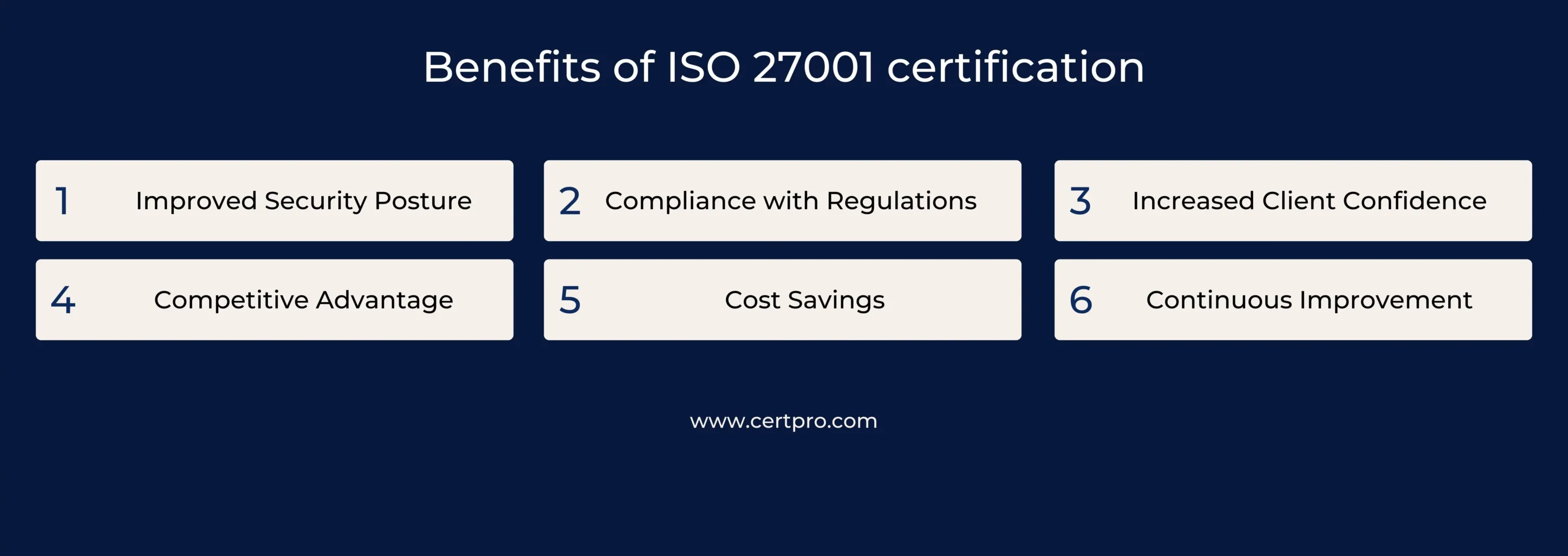
ISO 27001 certification delivers measurable, documented benefits to New Zealand organizations operating in information-intensive environments. The certification confirms that an organization’s information security practices meet internationally recognized requirements — providing a verifiable basis for trust with customers, regulators, and business partners. For New Zealand organizations competing in domestic and export markets, ISO 27001 certification functions as a market qualification credential that reduces friction in enterprise sales cycles, government procurement processes, and international partnership negotiations.
ISO 27001 certification provides New Zealand organizations with a structured framework for demonstrating compliance with information security obligations under the New Zealand Privacy Act 2020. The Privacy Act 2020 requires organizations to protect personal information from unauthorized access, use, or disclosure — obligations that align directly with ISO 27001 Annex A controls covering access management, cryptography, incident response, and physical security. An ISO 27001-certified ISMS creates documented evidence of the security measures in place, which supports an organization’s ability to demonstrate compliance in the event of a Privacy Commissioner investigation or a notifiable privacy breach.
For organizations operating in the financial services sector, ISO 27001 certification supports alignment with the Reserve Bank of New Zealand’s operational risk management expectations and the Financial Markets Authority’s cybersecurity guidance. Healthcare organizations handling health information must comply with the Health Information Privacy Code 2020 — a specialized privacy code that imposes security requirements addressed by ISO 27001 controls. Government agencies and their suppliers subject to NZISM requirements benefit from the alignment between ISO 27001 Annex A controls and the NZISM’s security control framework, enabling efficient mapping between the two frameworks without duplication of compliance effort.
ISO 27001 certification in New Zealand provides a direct competitive advantage in markets where information security is a procurement qualification criterion. Technology vendors, cloud service providers, and professional services firms holding ISO 27001 certification are positioned to respond to enterprise RFPs and government tenders that specify certification as a baseline requirement. The certification eliminates the need to complete bespoke security questionnaires for each prospective customer — a significant operational efficiency gain for organizations managing multiple concurrent sales processes.
New Zealand organizations exporting technology services to Australia gain a specific commercial advantage from ISO 27001 certification. Australian enterprises subject to APRA CPS 234 must assess the information security capabilities of their material service providers — ISO 27001 certification provides a recognized basis for satisfying these supply chain security assessment requirements. Similarly, New Zealand organizations pursuing contracts with European clients benefit from ISO 27001’s alignment with GDPR Article 32 security requirements, enabling streamlined vendor security assessments in European procurement processes. Information security certification NZ thus functions as international market access documentation for New Zealand’s technology export sector.
The ISO 27001 certification process requires organizations to implement a systematic risk management approach that identifies and addresses information security risks before they materialize as security incidents. Organizations that achieve ISO 27001 certification demonstrate a measurably improved security posture relative to organizations operating without a structured ISMS. The standard’s requirements for access control (Annex A 5.15–5.18), incident management (Annex A 5.24–5.28), business continuity (Annex A 5.29–5.30), and supplier security (Annex A 5.19–5.22) address the most common vectors for information security breaches in New Zealand organizations.
The internal audit and management review requirements of ISO 27001 (Clauses 9.2 and 9.3) create ongoing governance mechanisms that identify emerging risks and control weaknesses before they become material incidents. For New Zealand organizations operating in sectors with significant cyber threat exposure — including financial services, healthcare, and critical infrastructure — this proactive risk identification capability is a material operational benefit. The documented corrective action process required by Clause 10 ensures that identified weaknesses are systematically resolved and that the ISMS improves over time rather than degrading as the threat environment evolves.
- ✓Formal certification of ISMS conformance against ISO/IEC 27001:2022, providing verifiable, third-party validated security assurance to customers and partners
- ✓Documented alignment with New Zealand Privacy Act 2020 obligations, supporting regulatory compliance and reducing notifiable breach liability exposure
- ✓Market access qualification for government tenders, enterprise procurement processes, and international customer contracts requiring ISO 27001 certification
- ✓Alignment with NZISM security control requirements for government agencies and their technology suppliers
- ✓Structured risk management framework that systematically identifies and reduces information security risks across the defined ISMS scope
- ✓Reduced customer security questionnaire burden through a single, recognized certification credential accepted internationally
- ✓Enhanced cyber insurance positioning — ISO 27001 certification demonstrates documented security controls that may positively influence cyber insurance terms
- ✓Improved incident response capability through mandatory Annex A controls covering detection, response, and recovery processes
- ✓Strengthened supplier security management through Annex A controls requiring formal supplier risk assessment and contractual security obligations
- ✓Continuous improvement mechanisms embedded in the standard’s PDCA cycle, ensuring the ISMS remains effective as the threat landscape evolves
- ✓Regulatory Alignment and Legal Risk Reduction
- ✓Commercial and Competitive Advantages
- ✓Operational Risk Reduction and Security Posture Improvement
ISO 27001 Compliance in New Zealand
ISO 27001 compliance in New Zealand refers to an organization’s conformance with the requirements of ISO/IEC 27001:2022, demonstrated through the implementation and operation of a conforming ISMS. ISO 27001 compliance is distinct from ISO 27001 certification: compliance describes the state of conformance, while certification is the formal, third-party verified confirmation of that conformance issued by an accredited certification body. Organizations may achieve internal compliance without pursuing formal certification — however, only certification provides an externally verifiable, audited declaration that third parties can rely upon without conducting their own security assessments.
New Zealand Regulatory Context for ISO 27001 Compliance
The New Zealand Privacy Act 2020 establishes 13 Information Privacy Principles (IPPs) governing the collection, use, storage, and disclosure of personal information by organizations operating in New Zealand. Information Privacy Principle 5 requires organizations to protect personal information against loss, unauthorized access, use, modification, disclosure, or other misuse. ISO 27001 Annex A controls — particularly those addressing access control, cryptography, physical security, and incident management — directly support compliance with IPP 5. The Privacy Act 2020 also introduced mandatory privacy breach notification obligations: organizations must notify the Privacy Commissioner and affected individuals of privacy breaches that cause or are likely to cause serious harm. A documented ISO 27001-compliant ISMS provides the incident detection and response capabilities required to identify and respond to notifiable breaches within the required timeframes.
The New Zealand Information Security Manual (NZISM) is the New Zealand Government’s standard for information security in government agencies and their suppliers. The NZISM provides detailed technical controls and security requirements that government agencies must implement. While the NZISM and ISO 27001 are distinct frameworks, they share significant alignment in control objectives and requirements. Organizations that achieve ISO 27001 certification with an ISMS scope covering government service delivery operations can leverage their ISO 27001 documentation to demonstrate substantial alignment with NZISM requirements, reducing the overall compliance documentation burden for government contracts.
Cross-Border Data Flows and International Compliance Alignment
New Zealand organizations engaged in cross-border data transfers must comply with the requirements of Privacy Act 2020 Principle 12, which restricts the disclosure of personal information to overseas recipients unless the recipient country or organization provides comparable privacy protections. ISO 27001 certification provides documented evidence of security controls that support the cross-border transfer justification process — demonstrating that the recipient organization (or the New Zealand organization’s overseas operations) maintains security practices equivalent to New Zealand privacy standards.
New Zealand is recognized as a country providing adequate protection for personal data under the European Union’s General Data Protection Regulation (GDPR) adequacy framework. New Zealand organizations transferring data to or from European Union member states benefit from this adequacy recognition, but EU-based partners increasingly require ISO 27001 certification as contractual evidence of security controls under GDPR Article 28 processor agreements. ISO 27001 certification thus supports New Zealand organizations’ ability to demonstrate GDPR-aligned security controls without the need for separate European security assessments. For New Zealand fintech firms, SaaS providers, and cloud service companies with international customer bases, this cross-jurisdictional compliance alignment represents a significant operational efficiency benefit.
ISO 27001 and the New Zealand Digital Economy
New Zealand’s digital economy is expanding rapidly, with technology exports — including software, cloud services, and digital platforms — representing a growing component of national export revenue. As New Zealand technology companies scale internationally, they encounter information security requirements imposed by enterprise customers, financial institution clients, and government procurement authorities in export markets. ISO 27001 certification provides New Zealand technology exporters with a universally recognized security credential that satisfies these requirements across multiple jurisdictions simultaneously — reducing the compliance cost of market entry in Australia, the United Kingdom, the United States, Singapore, and other major markets.
The New Zealand government’s Digital Strategy for Aotearoa and associated cybersecurity initiatives emphasize the importance of robust information security practices across the public and private sectors. The National Cyber Security Centre (NCSC) — part of the Government Communications Security Bureau (GCSB) — provides threat intelligence and security guidance to New Zealand organizations, particularly those operating in critical infrastructure sectors. ISO 27001 certification aligns with NCSC recommendations for systematic information security risk management and provides a structured framework for implementing the controls recommended in NCSC advisories and the New Zealand Cyber Security Strategy.
ISO 27001 Certification Cost in New Zealand
ISO 27001 certification cost in New Zealand is determined by a defined set of factors that reflect the scope, complexity, and duration of the certification audit program. CertPro operates on a fixed pricing model for ISO 27001 certification services in New Zealand — costs are determined by the defined audit scope, organizational size, number of personnel within the ISMS scope, number of sites, and the complexity of information assets and systems covered by the certification. Fixed pricing provides New Zealand organizations with cost certainty from the outset of the certification engagement, enabling accurate budget planning for the full three-year certification cycle.
Factors Determining ISO 27001 Certification Cost
The primary cost determinants for ISO 27001 certification in New Zealand include the size of the organization within the ISMS scope (measured by the number of full-time employees and contractors covered), the number of physical sites included in the scope, the complexity and sensitivity of information systems and data assets, the number of applicable Annex A controls identified in the Statement of Applicability, and whether the audit is conducted on-site in New Zealand locations or remotely. Organizations with multiple sites — for example, operations across Auckland, Wellington, and Christchurch — require additional audit days to cover all locations, which increases the total certification cost relative to single-site organizations.
The total cost of ISO 27001 certification over the three-year cycle comprises four distinct audit events: Stage 1 documentation review, Stage 2 implementation audit, first-year surveillance audit, second-year surveillance audit, and the recertification audit. Each event is priced separately based on the audit days required. Organizations should budget for the complete three-year cycle when planning for ISO 27001 certification, as surveillance audits are mandatory for maintaining certification status. CertPro’s fixed pricing model provides organizations with visibility over the complete three-year cost commitment at the time of engagement, enabling informed procurement decisions without variable or unexpected cost escalation.
| Audit Stage | Timing | Scope |
|---|---|---|
| Stage 1 — Documentation Review | Initial engagement | ISMS documentation against Clauses 4–10 |
| Stage 2 — Implementation Audit | 4–8 weeks after Stage 1 | Full ISMS operational effectiveness and Annex A controls |
| Surveillance Audit 1 | ~12 months post-certification | Continued conformance and corrective action verification |
| Surveillance Audit 2 | ~24 months post-certification | Continued conformance and ISMS improvement evidence |
| Recertification Audit | ~36 months post-certification | Full ISMS reassessment — equivalent to Stage 2 scope |
CertPro ISO 27001 Certification Services in New Zealand
CertPro is a Licensed CPA Firm conducting ISO 27001 certification audits for organizations across New Zealand. CertPro’s ISO 27001 certification services are delivered under a formal audit methodology aligned with ISO/IEC 27001:2022 and international accreditation requirements. CertPro’s audit team comprises qualified information security auditors with sector-specific expertise spanning technology, financial services, healthcare, government, and critical infrastructure — the key industries driving demand for ISO 27001 certification in New Zealand.
CertPro conducts ISO 27001 certification audits for New Zealand organizations operating from Auckland, Wellington, Christchurch, Hamilton, Tauranga, and all other New Zealand locations. CertPro’s fixed pricing model provides cost certainty across the complete three-year certification cycle. All certification decisions are made by qualified decision-makers independent of the audit team, ensuring the objectivity and integrity of every certification outcome. CertPro issues ISO 27001 certificates that are recognized by enterprise customers, government procurement authorities, and international business partners as credible, audited evidence of ISMS conformance.
CertPro’s Audit Methodology and Institutional Authority
CertPro’s ISO 27001 audit methodology is structured around objective evidence assessment. Auditors do not advise, recommend, or guide organizations on how to implement controls — CertPro’s role is strictly to evaluate whether the implemented ISMS conforms to ISO/IEC 27001:2022 requirements and to issue certification decisions based on documented audit findings. This clear separation between auditor and organization ensures the independence and credibility of certification decisions, consistent with the requirements of accreditation bodies governing ISO 27001 certification programs internationally.
CertPro’s audit reports provide detailed, clause-by-clause findings documenting conformance status, identified nonconformities, and the factual basis for each audit conclusion. These reports serve as formal certification records that organizations may present to customers, regulators, and business partners as evidence of the audit activities conducted and the certification decision reached. CertPro’s institutional positioning as a Licensed CPA Firm — rather than a consulting or advisory organization — provides New Zealand organizations with a certification credential that reflects independent, evidence-based professional judgment rather than self-assessment or consulting-supported declarations.
Scope of CertPro ISO 27001 Certification Services
- ✓ISO 27001 Stage 1 documentation review audits for New Zealand organizations at initial certification and recertification stages
- ✓ISO 27001 Stage 2 implementation audits conducted on-site at New Zealand locations including Auckland, Wellington, and Christchurch, or remotely where scope permits
- ✓Annual surveillance audits confirming continued ISMS conformance under ISO/IEC 27001:2022 throughout the three-year certification cycle
- ✓Recertification audits at 36 months for renewal of ISO 27001 certificates for New Zealand certified organizations
- ✓Multi-site certification audits covering organizations operating across multiple New Zealand locations or with offshore operations within the ISMS scope
- ✓Sector-specific audit expertise covering financial services, technology, healthcare, government contracting, cloud services, and critical infrastructure
- ✓Fixed pricing for all audit stages, providing cost certainty for the complete three-year ISO 27001 certification program
- ✓Formal audit reports and certification records suitable for presentation to government procurement authorities, enterprise customers, and international business partners
CertPro’s ISO 27001 certification services in New Zealand are structured to serve organizations at all stages of the certification lifecycle — from initial certification through to recertification and ongoing surveillance. Organizations that have previously held ISO 27001 certification under the 2013 standard and require transition to ISO/IEC 27001:2022 — by the 31 October 2025 transition deadline — can engage CertPro for transition assessments that evaluate conformance against the revised standard requirements, including the restructured 93-control Annex A. CertPro’s audit team applies consistent methodology and objective standards across all engagement types, ensuring that every certification decision reflects the same level of rigor and evidence-based assessment regardless of organizational size or sector.
Steps for Obtaining ISO 27001 Certification in New Zealand
Obtaining ISO 27001 certification in New Zealand requires the organization to establish, implement, and operate a conforming ISMS, then engage an accredited certification body to conduct the formal certification audit. The organization’s responsibilities — ISMS design, documentation, and implementation — are distinct from and precede the certification body’s audit activities. The following steps define the complete sequence from ISMS establishment through to certificate issuance for New Zealand organizations pursuing ISO 27001 certification.
- Define the ISMS Scope: Establish the organizational boundaries, information assets, locations, and processes covered by the ISMS. The scope statement must be documented and must accurately reflect the extent of the certification being sought. For New Zealand organizations, the scope should reference relevant regulatory obligations including the Privacy Act 2020.
- Conduct a Formal Risk Assessment: Apply a documented risk assessment methodology to identify information security risks within the defined scope. Assess each risk by likelihood and impact, producing a risk register with quantified or qualified risk ratings for all identified risks.
- Produce the Statement of Applicability: Map each of the 93 ISO 27001 Annex A controls to the organization’s scope. Document justification for the inclusion or exclusion of each control. The SoA must be reviewed and signed off by authorized management.
- Develop and Implement the Risk Treatment Plan: Define and implement the controls selected to address identified risks. Document implementation evidence — policies, procedures, technical configurations, training records, and operational logs — for each applicable control.
- Establish ISMS Documentation: Create and maintain all mandatory documented information required by ISO/IEC 27001:2022, including the information security policy, risk assessment methodology, risk register, SoA, risk treatment plan, and records of ISMS operation.
- Conduct Internal Audits: Perform formal internal audits against all ISO/IEC 27001:2022 clauses to verify that the ISMS is implemented and operating as intended. Document internal audit findings and initiate corrective actions for identified nonconformities.
- Conduct Management Review: Top management conducts a formal management review of the ISMS covering internal audit results, risk assessment updates, performance metrics, and continual improvement decisions. Document management review outputs and decisions.
- Engage CertPro for Stage 1 Audit: Submit ISMS documentation to CertPro for the Stage 1 documentation review audit. Address any findings identified in the Stage 1 audit report before proceeding to Stage 2.
- Undergo Stage 2 Certification Audit: CertPro auditors conduct the on-site or remote Stage 2 implementation audit. Resolve any major nonconformities identified, providing objective evidence of resolution for auditor verification.
- Receive ISO 27001 Certificate: Upon successful completion of Stage 2 and resolution of all major nonconformities, CertPro issues the ISO 27001 certificate, valid for three years subject to annual surveillance audits.
The timeline to achieve ISO 27001 certification in New Zealand varies based on the organization’s current information security maturity, the complexity of the ISMS scope, and the resources allocated to ISMS implementation. Organizations starting from a low information security maturity baseline typically require 9 to 18 months from ISMS initiation to certificate issuance. Organizations with existing information security programs, documented policies, and implemented technical controls can achieve certification in 6 to 12 months. The Stage 1 and Stage 2 audits conducted by CertPro typically occur within a 4 to 8 week window between documentation review and implementation audit, with the certification decision issued within 30 days of Stage 2 completion, subject to nonconformity resolution timelines.
Organizations under time pressure — for example, those facing a specific tender deadline or customer certification requirement — should plan the certification timeline carefully, accounting for the internal ISMS implementation period, the scheduling of Stage 1 and Stage 2 audits with CertPro, and the time required to resolve nonconformities identified during the audit process. CertPro’s audit scheduling for New Zealand organizations is managed through a structured engagement process that provides organizations with confirmed audit dates and audit plans in advance, enabling resource planning and audit preparation activities to proceed with full transparency on timing and scope.
- ✓Timeline for ISO 27001 Certification in New Zealand
FAQ
▶
How long does ISO 27001 certification take in New Zealand?
▶
What is the cost of ISO 27001 certification in New Zealand?
▶
Is ISO 27001 certification mandatory in New Zealand?
▶
What is the difference between ISO 27001 and ISO 27002?
▶
How often must ISO 27001 be recertified?
▶
What does ISO 27001 certification confirm for a New Zealand organization?
▶
How many controls does ISO 27001:2022 require?
▶
What is the Stage 1 audit in the ISO 27001 certification process?
HOW COMPLIANCE AUDIT SOFTWARE IMPROVES AUDIT READINESS
Today, most companies deal with a growing number of compliance regulations. From data privacy standards to security frameworks like SOC 2 and ISO 2700…

THE ROLE OF GRC IN ISO 27001, SOC 2, AND OTHER FRAMEWORKS
The term GRC stands for Governance Risk and Compliance. It’s a system of integrated and centralized approaches used by organizations. This system comb…
HOW TO PREPARE FOR A MULTI-STANDARD AUDIT (SOC 2, ISO 27001, HIPAA) WITHOUT OVERLAPPING EFFORTS
The current regulatory landscape is no less than a proving ground for global businesses. Organizations are struggling to comply with the complex regul…
Get In Touch
have a question? let us get back to you.